
The high-intensity election campaign in Tamil Nadu concluded with accusations and counter-accusations between the DMK and AIADMK, while new entrant TVK made its presence felt. Key issues included state autonomy, corruption, law and order, and the delimitation bill.

The Indian embassy in Tehran has earlier stated that it is facilitating the safe movement of nationals who wish to leave Iran.

The high-pitched campaign for the first phase of West Bengal assembly elections concluded with the BJP and TMC focusing on electoral rolls and dietary habits, while making promises to voters. Voting is scheduled in 152 constituencies across north Bengal and southern districts, with over 3.60 crore electors eligible to vote. A record number of Central paramilitary forces have been deployed, and several districts have been identified as highly sensitive.

Defence Minister Rajnath Singh assures India's energy security amidst West Asia tensions, highlighting naval protection of tankers and readiness to counter cross-border terrorism.

Police have invoked the stringent Unlawful Activities (Prevention) Act (UAPA) against 21 people apprehended for alleged involvement in a Pakistan-linked espionage racket. The suspects are accused of passing sensitive information to a Pakistan-based handler through social media and other means.

Is Bhutan merely experimenting with digital finance -- or is the Himalayan kingdom punching far above its weight, quietly playing one of the most sophisticated strategic games in Asia today? asks Varun Arya.

India has strongly condemned Pakistan's airstrike on a drug treatment centre in Kabul, Afghanistan, calling it a blatant assault on Afghanistan's sovereignty and a threat to regional peace and stability.

The Ministry of External Affairs has confirmed that nearly 880 Indian nationals, including students, have been evacuated from Iran via Armenia and Azerbaijan due to the ongoing conflict in West Asia.

Sanju Samson surprised fans with his fluent Hindi and revealed how growing up in Delhi and near the Kerala-Tamil Nadu border helped him learn multiple languages and connect with Indian teammates.

The clock on the ceasefire is running out. But everyone's already whispering about round two, possibly as soon as this weekend.

The US blockade on Iranian ports is aimed to curb Iranian energy exports, thereby crippling its economy to force Iran back to the negotiating table, points out Commodore Venugopal Menon (retd).

'We kept our bags packed, ready to jump into the sea. Many times, I felt it could be my last day.'

Eleven Naxalites, including five senior operatives with a combined bounty of Rs 68 lakh, have surrendered to police and CRPF forces in Gadchiroli district, Maharashtra, marking a significant blow to Left Wing Extremism in the region.

Pakistan launched a military operation targeting terrorist hideouts in Afghanistan following a series of attacks, including a suicide bombing that killed Pakistani soldiers. The action comes after repeated calls for the Afghan Taliban to prevent terrorists from using Afghan soil to launch attacks against Pakistan.

Reserve Bank of India (RBI) Governor Sanjay Malhotra stated that preventing second-round effects of supply shocks, where inflation expectations rise due to prolonged disruptions, is the primary role of monetary policy. He also defended the RBI's foreign exchange market interventions, asserting it did not commit to an 'indefensible peg'.

The diplomatic intervention follows various media reports which attributed comments to Iranian lawmaker Alaeddin Boroujerdi, suggesting that merchant vessels were being charged USD 2 million for safe passage through the "conflict-hit Hormuz."

India is one of the few nations, and perhaps the only nation, that has good relations with America, Israel and Iran. Knowing that a war in the Gulf would damage our economy, hurt supply of fertilisers and fuel, and cause general chaos, we should have tried to ensure this war did not begin, asserts Aakar Patel.

'If this region destabilises, then we are not far away. This region should not destabilise.'

Pakistani security forces killed 13 terrorists in multiple intelligence-based operations in the Khyber Pakhtunkhwa province, amidst a surge in terrorist activities in the region.
One person was killed and seven others injured after Afghan forces allegedly carried out mortar shelling on civilian areas near the Afghanistan border in northwestern Pakistan's Khyber Pakhtunkhwa.
US President Donald Trump on Sunday announced that the American Navy will henceforth block all maritime traffic entering the Strait of Hormuz.

Tensions escalated dramatically on March 5, 2026, as the United States and Israel launched coordinated strikes on Iran, triggering retaliatory explosions across Tehran, Sanandaj, and beyond.

There are enough people at the top decision-making level in Tehran who are still willing to negotiate, provided Trump can create the right setting for the negotiation to acquire a dynamic of its own, points out Ambassador M K Bhadrakumar.

MEA spokesperson Randhir Jaiswal said the number of Indians exiting Iran through Armenia and Azerbaijan has increased since the previous update.

The urgency for a resolution is underscored by the military situation, as joint operations by Israel and the US have consistently been "targeting Iran's missile systems, launch sites and other critical infrastructure" since the onset of the conflict.

Two Bangladeshi nationals, previously deported from India, have been arrested in Delhi for illegally re-entering the country and resuming unlawful activities. The individuals were apprehended near Jahangirpuri Metro Station and are now facing deportation proceedings.

Chaffing under public ridicule in the US as well as internationally for having 'lost' the war, Trump is under immense pressure to do something, cautions Ambassador M K Bhadrakumar.

Small parties have the capacity to play both ends against the middle. Puducherry could be heading that way, points out Aditi Phadnis.

Delhi Police have arrested two men suspected of kidnapping and threatening an excise department constable and his driver in connection with illegal liquor supply.

Russian Foreign Minister Sergei Lavrov discussed tensions between Afghanistan and Pakistan with his Afghan counterpart, Amir Khan Mottaqi, following US-Israeli strikes on Iran, emphasising the need for political and diplomatic solutions.

The 8th World Air Quality report reveals Pakistan as the most polluted country, with India ranking sixth. The report analyses air quality data from over 9,446 cities across 143 countries, highlighting the severe impact of pollution on global health, especially for children.

Trump has made it clear: the US will not lift its blockade of Iranian ports until a deal is signed.

The Lebanese army has begun evacuating some of its forward positions along the border with Israel and redeploying troops to other posts, Lebanon's state-run National News Agency (NNA) reported on Tuesday, amid intensified Israeli military activity in the area.

The IRGC said the strikes were conducted in support of offensives by Hezbollah and residents of southern Lebanon, and described them as the beginning of a series of pre-announced operations against Israel.

Both sides have now revealed a preference for escalation over strategic defeat, and each new provocation narrows the space for the next pause. The Touska seizure, Iran's refusal to negotiate under blockade, Israel's strikes on Iranian oil infrastructure -- all of these add up to an increasingly untenable situation. This makes the wild card -- Trump and his motormouth -- more consequential than ever, notes Prem Panicker in his must read blog on the Iran War.
Suspected militants attacked a police vehicle in Bannu district, Pakistan, resulting in the death of one officer and injuries to two others. The attackers also set the vehicle on fire. Investigations are underway.
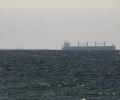
The UK Maritime Trade Operations issued a warning noting that the incident took place approximately 15 nautical miles north of Sharjah.

28 Indian vessels carrying 778 seafarers are stranded in the Persian Gulf, prompting government monitoring and coordination to ensure their safety and security.

Defence Minister Rajnath Singh has launched a strong attack on West Bengal Chief Minister Mamata Banerjee, accusing her government of appeasement politics, encouraging illegal immigration for votes, and leading the state into misrule and corruption.

The intriguing bit is that Trump is likely to attend the talks in Islamabad this weekend -- if he does, it will be the clearest signal yet that the US is ready to exit the war with some sort of win to show, since he cannot afford to go for the talks and return empty-handed, notes Prem Panicker in his must read blog on the Iran War
